Friday, February 22, 2013

"Alternatieve" actiemethoden in Portugal


De acties van de vakbond CGTP lijken weinig uit te halen. Dit is het geval om verschillende redenen, die ongetwijfeld elkaar versterken. Enerzijds slaagt de vakbond er niet in een voortrekkersrol te spelen in het verzet, en volgen de betogingen en stakingen die afgekondigd worden eerder de druk in de samenleving dan dat ze zelf de mobiliserende kracht zijn; een duidelijk actieplan op de lange termijn is er helemaal niet. Belangrijke slachtoffers van de crisis zoals jongeren met precaire contracten, het toenemend aantal werklozen; en de uitbaters en werknemers van kleine handelszaken en horeca zijn bovendien praktisch niet vertegenwoordigd en georganiseerd binnen de vakbonden. Bovendien lijken de betogingen vooral op super georganiseerde stoeten, met eeuwenoude slogans die meer traditie uitstralen dan strijdbaarheid; het contrast tussen de beelden van de betoging in Brussel van donderdag en die van vorige zaterdag in Lissabon in dan ook enorm. Mede hierdoor slaagt de vakbond er vaak slechts in oudere ambtenaren te mobiliseren op haar betogingen. Misnoegde lagen van de Portugese bevolking, vooral gelinkt aan de sociale beweging “Que se lixe a Troika”, die op 15 september 1 miljoen mensen op straat bracht, maken sinds 2 weken gebruik van nieuwe vormen van protest.

Grandolar.

Vorige week werd de eerste minister in zijn parlementaire speech onderbroken door een groep van 40 toeschouwers die op een bepaald moment Grandola begonnen te zingen. Grandola is één van de strijdliederen die gelinkt wordt aan de Portugese revolutie. Het is een lied dat geassocieerd wordt met antifascisme, democratie en vrijheid. Uiteindelijk werden de zangers de deur gewezen door de politie, maar de video van de eerste minister die moest zwijgen ging viraal op het internet. “Grandolar”, een nieuw werkwoord, is ondertussen een echte hit geworden. Sinds die dag worden leden van de regering en de Troika bij de meeste openbare speeches onderbroken door het zingen van Grandola; naast de eerste minister werden ook de minister van financiën, de minister van parlementaire zaken en de vice-voorzitter van de Europese commissie onderbroken. De traditie en connotatie die het lied heeft zorgde er in het begin voor dat de “slachtoffers” niet wisten hoe ze moesten reageren, sommigen lachten, sommigen probeerden mee te zingen, maar veelal verdwenen de sprekers gewoon uit de persconferentie.
De actie is het initiatief van de organisatoren van de beweging “Que se lixe a Troika”, en probeert via deze acties een manier te creeren voor te mobiliseren naar de betogingen van 2 maart. “O Povo é quem mais ordena”, (Het is hat volk dat meest beslist), één van de strofes uit Grandola, is immers ook de titel van de betoging. En de methode lijkt succesvol te zijn.

Facturar

Een andere vorm van protest richt zich tegen het belastingbeleid van de regering. Na de opeenvolgende BTW-verhogingen en dalende koopkracht bij de bevolking staan heel wat restaurants, cafés, bakkerijen en buurtwinkels op de rand van het faillissement. Veel van deze zaken proberen het hoofd boven water te houden door een deel van hun omzet niet aan te geven; iets wat door veel van de handelaars ook als “fiscaal rechtvaardig” wordt gezien, gezien de officiële belasting ontduiking van hun grote concurrenten; het is immers niet voor niets dat 17 van de 20 bedrijven op de beurs van Lissabon (Psi-20) hun officiële zetel in Nederland hebben. Bovendien zorgt het aanhoudende snoeien in het overheidspersoneel voor een tekort aan belastinginspecteurs.

De regering wil hierop antwoorden door de bevolking in te schakelen als belastingcontroleur. Het heeft hiervoor een decreet goedgekeurd waardoor klanten verplicht worden steeds hun Btw-bonnetje te vragen. Wie dit niet doet riskeert een boete. Ondertussen hebben verschillende klanten reeds boetes gekregen omdat ze op café geen factuur  of naam vroegen voor hun koffie of pint, wat heel wat verontwaardiging heeft veroorzaakt.

Die verontwaardiging werd laatste week omgezet in een massale nieuwe actie-vorm. Tuga-leaks, de Portugese tegenhanger van wikileaks verpreidde deze week de BTW-nummers van Pedro Passos Coelho, Miguel Relvas en Antonio Gaspar, de eerste minister, de minister van parlementaire zaken en de minister van financiën. Duizenden mensen zijn deze nummers beginnen gebruiken wanneer ze hun facturen moesten vragen. Het gevolg was dat de belastingsinspectie een enorme toevloed kreeg van kosten gemaakt door deze 3 figuren. Een bijkomend voordeel is dat aan het einde van het jaar dit er waarschijnlijk toe zal leiden tot het “feit” dat ze veel meer uitgegeven hebben dan hun officiële inkomen kan verantwoorden; wat een grondige belasting controle door de inspectie wettelijk verplicht maakt.

PS: Ondertussen raakte bekend dat de CGTP zich bij de protesten van 2 maart van "Que se lixe a Troika" aansluit! Er lijkt eenheid te komen in de strijd!
 

Thursday, February 7, 2013

The role of ideology and norms in the exchange of experiences


The origin of the concept of the idea of life-stories, as a method of retreaving facts, comes from the illumination. It is traced back to the difference between Erlebnis en Erfarung. Erfarung is a narrative, or reasoning about an event one has experienced.
The difference between the two is the manner how this event is thought about. This thinking is in general a product of the dominant epistemology, as it is only in the framework of ideas which are consensus ideas, that one is able to communicate with oneself and particularly with others about the event. To be considered as a “reasonable” interpretation of the facts, the reading of those facts has to be according to the norms between those which it is communicated. If it is to be considered as something agreeable by “everyone”, it has to be reasoned according to the consensus epistemology or ideology.
The “liberal” difference, dominant in bourgeois society, but also the dominant in biographies as a method of scientific thinking and research between Erlebnis en Erfarung, is one of rationalization, where the rationality of the reasoning is the consensus in the society. If someone interprets an event outside of the consensus of rational rules, the reasoning is not accepted. As an example, serves the young immigrant who has to tell “his history” in front of a French jury in order to get a permit to stay in the country; an emotional translation of these events or a theological translation would not be admitted; although it could make perfectly sense for the immigrant.
It is clear that is not always necessary the case. In pre-bourgeois western societies, theological thinking for example was the dominant form of thinking. So the interpretation of an event would only be considered as valid if it would be according to the theological consensus. The interpretation of an event would be considered as “a miracle” or “the will of God” for example, reasoning that today would be considered as invalid. Scientific reasoning on the other hand was considered as foolish, as Copernicus for example learned the hard way.
As long as there is a consensus about norms, if there is a ruling ideology due to stable power relations in a social conflict, - as a social (class)-compromise, or due to uncontestable power - then an “erlebnis” can only be acceptably translated into an “erfahrung” according to those norms.
It also explains why intercultural or interclass exchange of experiences - experiences here are “erfahrungen” - are generally very difficult because there is no epistemological consensus between them. If there would be a consensus, it would mean that one has accepted the norms of the other.  This means that translation is only possible with the acceptance of universal rules of communication, and thus in accordance to the domination of certain norms over others according to the power relations between both.

* These thoughts were inspired by a seminar about biographies by
Christine Delory-Monberger, and the following debate at CES 7/2/2013

Thursday, January 10, 2013

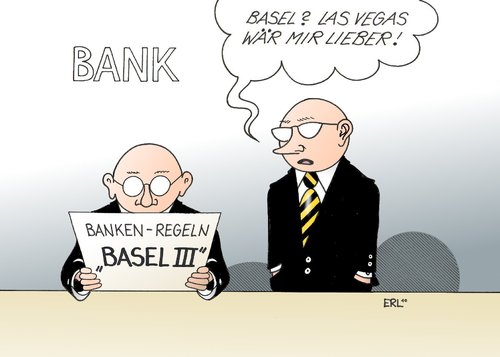
Tanden trekken bij Basel III

Zeepbellen nodig om niet ten onder te gaan

 
Vertaling door Geert C - socialisme.be
 
De internationale financiële regulators kwamen in het Zwitserse Bazel bijeen om de regels van Bazel III aan te passen en te verzachten. Die regels werden door de G20 overeengekomen in de nasleep van de crisis. Het doel was om een nieuwe ‘grote recessie’ te vermijden. De Bazel-regels zouden van 2013 tot 2018 worden doorgevoerd en moesten de risico’s van bankeninvesteringen beperken.

Als een bank deposito’s van mensen vraagt en dit geleende geld in de economie investeert – met kredietlijnen, investeringen of leningen – is er het risico dat de leningen niet terug betaald worden en er geen (grote) winsten worden geboekt. Om te garanderen dat het geld dat aan de bank werd toevertrouwd, wordt terug betaald is er nood aan een buffer om mogelijke verliezen te compenseren. Deze buffer is de zogenaamde kapitaalsbasis of het ‘eigen kapitaal’ van de aandeelhouders. De Bazel-akkoorden waren erop gericht om te bepalen welk kapitaal als ‘eigen kapitaal’ geldt en hoe groot de buffer moet zijn. Deze buffer beperkt de risico’s die de bank kan nemen.
Een eenvoudig voorbeeld: als een bank over een buffer van 10% eigen kapitaal moet beschikken, zou het voor een investering van 10 miljard dollar zelf 1 miljard van de aandeelhouders moeten inbrengen en slechts 9 miljard van depositohouders kunnen ophalen. Als die 10 miljard een winst van 10% opleveren, dan krijgt de bank 1000 miljoen dollar waarvan het 180 miljoen aan de depositohouders (aan 2% intrest) moet geven. De bank maakt op een geïnvesteerd kapitaal van 1 miljard een winst van 820 miljoen dollar, of 82% op jaarbasis. Maar als het slecht gaat met de economie en de zeepbel barst, is het mogelijk dat de 10 miljard dollar leidt tot een verlies van 5% waardoor er slechts 9,5 miljard overblijft. De depositohouders en hun 2% intrest halen daar 9,18 miljard van op, waardoor van de oorspronkelijke 1 miljard van de aandeelhouders nog slechts 320 miljoen overblijft. Als de verliezen meer dan 10% bedragen, lopen de verliezen op tot meer dan het geïnvesteerde bedrag van 1 miljard en heeft de bank een probleem…
Het vergroten van de kapitaalbuffer moet het risico op problemen beperken. Een bank default kan leiden tot een globale financiële catastrofe, zeker als alle banken grote verliezen maken als gevolg van een ‘systemisch risico’ van een globale economische neergang of kapitalistische recessie die de ‘financiële stabiliteit’ van het systeem vernietigt en een overheidstussenkomst op de kosten van de belastingbetalers vereist. Dat is overigens wat we in 2008 zagen. In de maanden na de grootste financiële crash ooit, stelden de politieke en industriële elite dat ze de financiële elite hard zouden aanpakken omdat hun ‘casinokapitalisme’ de reële economie bedreigde. De G20 maakte onder leiding van Sarkozy een akkoord op voor een sterkere regulering van de financiële sector, het gebrek aan regulering werd gezien als een oorzaak van de crisis. De onderhandelingen hierover leidden tot de nieuwe akkoorden van Bazel III. De financiële elite was daar steeds hard tegen gekant. Ze stelden dat een sterkere regulering een economisch herstel zou bedreigen omdat er minder geld zou zijn om in de economie te investeren en dus voor koopkracht te zorgen.
In feite hadden ze beiden gelijk. Geen extra regulering betekent een risico voor de stabiliteit van het systeem. Extra regulering zou een negatieve impact op de groei hebben, met mogelijk een depressie als gevolg. Deze tegenstelling is een uitdrukking van de tegenstellingen die in het kapitalisme ingebakken zitten. De tegenstelling werd in 2011 tijdelijk overkomen met de ontwikkeling van strengere regels van regulering, ook al bleven de maatregelen van Bazel III nog erg beperkt in vergelijking met die tijdens het Keynesiaanse Bretton-Woods tijdperk voor de invoering en ontwikkeling van de neoliberale financiële liberalisering en globalisering die gepaard ging met de ontwikkeling van een batterij aan complexe financiële investeringen. De regels van Bazel III zouden erg geleidelijk worden ingevoerd, de eerste maatregelen zouden pas in 2013 tot stand komen.
Nu zitten we in 2013 en zouden de eerste reguleringen moeten doorgevoerd worden. Net op dat ogenblik worden ze al afgezwakt. Wat in 2011 al kon voorspeld worden, namelijk dat de nieuwe regulering slechts schone schijn zou zijn, wordt nu werkelijkheid. Het is niet mogelijk om striktere regulering op te leggen als dit de mogelijkheid van een nieuwe recessie versterkt. Tegelijk vervalt de financiële sector terug in alle oude kwalen. De risico’s waren nooit zo groot, dat wordt door de OESO bevestigd in een analyse van de Europese bankensector. De zwakke regulering, de monetaire financiering door de ECB, de reddingsplannen van de FED, de miljarden van de trojka om Europese banken te redden,… hebben de winsten terug op het hoogtepunt van voor de recessie gebracht. Het orkest speelt opnieuw, het feest wordt voortgezet. Een voormalige CEO van Citibank stelde in 2007, enkele maanden voor de crash van Bear Stearns en IAG, “zo lang de muziek speelt, moet je rechtstaan en dansen.”
Zoals in 2007 is het voor iedereen duidelijk dat indien er al sprake zou zijn van een herstel – herstel is een verkeerde uitdrukking voor een beperkte afzwakking van de diepe recessie als gevolg van de Eurocrisis en een nieuwe bankencrisis – dat herstel eigenlijk fictief is. De werkloosheid blijft sterk toenemen, de koopkracht neemt af en de regeringsfinanciën van de meeste landen zijn niet bepaald gezond. Sinds de jaren 1970 heeft het kapitalisme de structurele overproductiecrisis aangepakt door de opbouw van een door schulden aangedreven consumptie, onder meer door een liberalisering van de financiële sector. Om de groei in stand te houden, werd een enorme financiële sector uitgebouwd met financiële titels die elke band met de reële economie verloren en steeds meer virtuele waarden hadden. Het kapitalisme had deze instrumenten nodig om de groei te behouden en de winsten de afgelopen 30 jaar in stand te houden. Het kapitalisme heeft zeepbellen nodig om zich recht te houden.

Dat is waarom de regels van Bazel III worden afgezwakt en waarom het slechts een kwestie van tijd is vooraleer er een nieuwe financiële crisis komt.

Monday, January 7, 2013

Pulling the Basel III teeth


Capitalism needs bubbles to keep itself afloat

Draft

Today international financial regulators came together in Basel to re-adapt, soften the Basel III rules. The Basel III rules had been agreed by the G20 in the aftermath of the crisis to avoid a new “Great recession” in the future. These Basel rules would be implemented from 2013 until 2018. Their main objective was to limit the amount of risks of bank investments. As a bank asks deposits of people and invests this loaned money in the economy – through credit-lines, investments or loans – it takes the risk that these loans are not paid back and gets a (high) profit in return. In order to ensure that the deposited money is paid back to the people having deposits (bank-accounts), it needs a buffer to compensate possible losses. This buffer is the so-called capital base or the “own capital” of the share-holders. The Basel-agreements state which capital can be seen as “own capital” and how high this buffer should be.  This buffer limits the amount of risks and investments a bank can make.

A very simplified example could be like this: If capital requirements would be of 10% of Tier I capital (in its current definition), this would for example mean that a bank need 1 billion dollars invested by its shareholders, to ask 9 billion of saving-accounts, in order to invest 10 billion dollars. If those 10 billion would create a profit of 10%, the bank would get 1000 million, of which it had to give 180 million to the deposit-holders (at 2% interest). This would mean that the bank would make 820 million dollar profits for an invested capital of 1 billion, or 82% a year. – If however the economy is going bad, and a bubble bursts, these 10 billion make losses 5% for example, only 9,5 billion remains. Deposit-holders (9 billion) and their 2 percent interests (180 million) have nevertheless to be paid back, so only 320 million remain of their initial 1 billion profits. If the losses would be 10% or more, they would have losses of 1,180 million on their 1,000 million invested and the bank would go bust… 

How higher the capital buffer, the less risk the bank has to go bust. Bank default risks the creation of global financial catastrophes, particularly, if all banks have big losses as a consequence of “systemic risk”, a global economic downturn or capitalist recession, destroying the “financial stability” of the system and requiring state-intervention at the cost of the taxpayers, as we have seen in 2008.  In the months following the biggest financial crash ever, the global political and industrial elite, showed the intension of being hard on the financial elite, as their “casino-capitalism” was ruining their real political economy with their risk-taking. The G20, lead by Sarkozy, made agreement on tougher regulation, as the soft regulation was seen as the cause of the crisis. These negotiations between states and financial regulator lead to the agreement of the new Basel III agreements, which had always been harshly opposed by the global financial elite. These argued that stronger regulation would endanger the recovery from the crisis, as it would cut the available money-supply for investing in the economy and provide purchasing power.

As a matter of fact, both were right. No extra regulation would mean a big risk to the stability of the system. Extra regulation would have a negative impact on growth, and provoke a possible depression. This contradiction is an expression of the contradictions within capitalism itself. The contradiction was trespassed temporarily in 2011, through the development of harsher rules of Basel III, on capital requirements for example – though still very liberal in comparison with the regulation during the Keynesian Bretton-Woods age, and before the introduction and development of neoliberal financial liberalization and globalization, as well as the development of the battery of complex structured financial investments as we know them now – but with an agreement to implement them only over time; concretely, the first measures would be only implemented from 2013 and finished in 2018.

Now, in 2013, when the first regulations would begin to be implemented, they are already softened. What could already be predicted in 2011, that the new regulations would be only window-dressing proves to be right. You cannot make regulations more strictly, when the world economy risks being re-thrown in a recession. At the same time, the financial world is already back again on its ancient track. Financial risks have never been greater, as recent OESO pointed out in its analysis of the European bank sector this week… but weak regulations, monetary financing by the ECB, the rescue packages of the FED, the billions of the European troika to save the European banks, etc… have also brought profits back to pre-recession hights. The music is playing again, the bubles and balloons are back for the party… and "as long as the music is playing, you've got to get up and dance," as Prince, the former CEO of citibank said in 2007, months before the crash of Bear Stearns and IAG.

As in 2007, everyone involved can see that if there would be a recovery – ‘recovery’ is a bad worth for a weak contention of a deep recession due to the Euro-crisis and a new banking crash – this recovery is fictitious, as unemployment is still rising, purchasing power is decreasing and government finances of most countries are not really healthy. Since the 1970’s capitalism has delt with its structural over-production crisis trough debt-financing of consumption, through financial liberalization. In order to keep consumption and accumulation growing it created an immense financial sphere, with financial titles that are totally disattached from the real economy and are no more than virtual value-forms. It needed these instruments to keep up its growth and restore its profits during the last 30 years: Capitalism needs the bubbles to keep itself afloat.

This is de reason why the Basel III agreements have been softened, and why a new financial crisis probably will not take long to emerge.


Wednesday, December 19, 2012

To be or not to be – that’s not the question


The Euro-exit and the dilemma of the Portuguese left

(DRAFT: working paper)

One of the practical issues that dominates the debate within the left and in the Portuguese society in general as a consequence of the Euro Crisis, is the question if Portugal should or should not stay in the Eurozone. Since the intervention of Troika in Portugal we have seen different organizations on the left and on the right take different points of view in this issue. A deeper understanding of this issue is crucial to find possible ways out of the current crisis situation.

Supported by an increasing number of academics that the incompatibility of the peripheral economies within the monetary union, the movement that defends the exit of the Eurozone is led by the Portuguese Communist Party (PCP), and includes movements as the MRPP. It’s position is usually influenced by nationalist and protectionist ideas, defending the sovereign rights of the Portuguese nation. Most point out that the Euro is a barrier for the competitiveness of the economy. The exit of the Eurozone would enable the country to regain control of vital monetary and budgetary macro-economic instruments to help the national economy recover from the crisis situation, through competitive devaluation and more inflationary-oriented policies. An example of this standpoint is represented by this interview with Jeronimo de Sousa, General secretary of the PCP.
Jerónimo de Sousa, in turn, said that the euro meant that Portugal lost competitiveness, sovereignty and the instruments that could help the country in a crisis scenario". Early in the debate, the communist leader pointed to "the conception of the European Union” as a point of divergence between the PCP Left Bloc. (Sol, 2011)
The leaders of the left bloc, in the persons of Francisco Louça and Joao Semedo, have taken the position that Portugal should stay in the Eurozone, as the exit would have “catastrophic effects” (Sol,2011). The exit of Portugal would be “catastrophic” as net-importers and net-debtors, such as Portugal and the other PIGS, would see the values of their debts in Euro rise, as well as the prices of the imported products. The exit of the Euro would mean a devaluation of around 50 percent of the new currency, which would mean a devaluation of the purchasing power of salaries and pensions, as well as a rise of the value of the consumer and public debts and interests.
For Louçã (Sol, 2011), the exit would be nothing else than a much quicker and more brutal means to implement austerity. As the aim of austerity is a long term “internal devaluation”, the currency devaluation by the Euro exit would only bring the same effects, but immediate. The only sector that would gain with these kind of policies, would be the export-sector
"For every three euros we export, we import four euros" said the leader of BE, pointing towards an increased indebtedness as the main consequence of a Portuguese exit of the euro. "everything would be much more expensive. Wages and pensions would lose purchasing power, and people who have housing loans would have to begin to pay much more. The worker would be the first victim of a catastrophic exit of Portugal the euro," said Louçã, who defended the issuance of European bonds as a way to "stop the speculation" on the national debt. (Sol, 2011)
"Beware of the beast. The Portuguese public debt is serious and dangerous, and the debt of banks is as big as the public debt. The day the banks would be nationalized, the Portuguese public debt will double" [...] Francisco Louçã said to disagree with any Euro exit strategy, and understands that this is being advocated by the "useful idiots of Mrs [Angela] Merkel." This exit, he said, "only favors the destruction of a common European policy, important for the response to austerity, and puts the left in the inacceptable position of proposing austerity against its people." The party leader admits that there are economists advocating this strategy, which "would favor the export sector", with the devaluation of the currency, expecting that the export industry would later invest in the economy and create jobs.
"
The calculations say it [the escudo] would be devalued by 50 percent," making imported goods "fifty percent more expensive and half the worth of the wages and pensions."
To Francisco Louçã, the nationalization of failed banks would mean the "socialization of the gigantic losses of financial capital", assuming the payment of the double of the public debt doubled, "in taxes, or any other manner". He argues that "the left cannot propose an even more brutal and fast austerity as a solution to current austerity," believing that "in a few years the bosses will invest more and save the economy". "I think it does not make sense from a social point of view. The left has to take a point of view that unifies the people, where the capacity of struggle unites, which is the struggle in defense of the salaries,” he concluded. (Expresso, 2011
The proponents of the exit on the other hand argue that staying within the Eurozone entails submitting the country to the austerity policies of the European Central Bank, and the Troika of ECB, EC and IMF. According to them, the continuation of these austerity policies in order to stay in the Eurozone, are the real social and economic disaster, continuing the downward spiral of unemployment, recession and neoliberal policies.
Each of the parts brings in some fundamental, correct critiques to the debate. The opponents of the exit bring fundamental critiques to the nationalist course and point out the catastrophic effects of leaving the Euro. The proponents bring in fundamental critiques to the Eurozone and the catastrophic effect of staying within. If those critiques of both sides are correct, this means that both alternative solutions are bad. It seems that the Portuguese left is struck within a dilemma which has no way out; any of the alternatives will be fundamentally bad for the Portuguese working class, and the Portuguese left is catched within the own contradictions of the capitalist system.
The apparent dualism between the two bad options, is a typical dialectical contradiction. What appears to be a dilemma with only bad options, is nothing else than a reformulation of other social contradictions which are fundamental to address in order to be able to have non-bad solutions for the fundamental dilemma of the Euro-exit. These fundamental contradictions of capitalism emerge in various forms in crisis periods; there is the recurring tension within capitalist governance between the accumulation process the legitimation of the system (Paterson), There is the tension between wages and profits (Marx), between democracy in society and the freedom market…
The crisis of the Eurozone however reveals one of the most fundamental contradictions in its clearest form; the fundamental political choice between the common good and private property. The common good is embodied by public services, a sustainable economy, good life, good salaries and working conditions, protection for the old and a future for the youth. Private property is embodied as juridical rights to ownership of economic resources, shares, but in particular ownership rights on the value of bonds, other debts and the rights to their repayment and the right to their interests. Within the current crisis situation it becomes clear that there is an impossibility to warrant both. Either policies defend the rights of the bondholders and the “rule of law”; which is the policy of Germany, the European Commission, the Troika and the national governments implementing austerity programs, which means a downward spiral of cuts in public and private spending, flexibilization and recession, with the scarification of the welfare state and democracy. Or they defy those property rights, the financial markets, the Troika and the ECB, practice juridical and financial disobedience and give priority to social rights, defending the historical social conquests, social justice, and fight for their improvement.
If the Euro is let out of the question, what is the question then? Other more fundamental policy choices emerges from the reality; the current social crisis situation demands far-reaching intervention to correct the consequences of the economic crisis and market failure – one would name them the internal contradictions of the capital accumulation process. Rising unemployment, particularly a youth unemployment reaching 30 to 50 percent in the peripheral member countries of the Eurozone, and the loss of private purchasing power provoking internal recession, requires massive public investment programs for job-creation and support of salaries. Unsustainability of debt-levels both in the public and private sector requires a massive debt-canceling and restructuring scheme, which will require a nationalization of the financial sector, in order to save it from its own collapse after cancelling debts, as well as to have the means to control public investments and redirect the economy towards public priorities. The housing-question, with hundreds of thousands of young people being forced to live again in their parents homes, while 750.000 homes have been abandoned, should be addressed with a redistribution and restoration program. The agriculture industry, which was gravely affected by contra-productive European CAP, should be addressed by a new Agrarian reform and sustainable reform… Similar issues raise in the forest management, small businesses, precarious working conditions, the ghetto-formation, … All these issues are the consequences of market-failures and as the capitalist system gets into crisis those problems increase, and are further increased by policy measures and austerity to secure financial property.
If a government would implement these measures within the current institutional framework, it is evident that these policymakers will enter in a confrontation with the authorities and interests governing the Eurozone. Non-payment of the public debt, the creating of massive public investments and nationalizations are policy-measures which would be considered as inacceptable in Brussels. As The ECB probably will not grant enough cash in such circumstances, probably this disobedient government will have to recreate its own monetary instruments. The long term consequence would therefore be a Euro-exit.
This form of Euro-exit however relates to the initial euro-exit as a dialectical negation of a negation, in that this Euro-exit as a consequence is totally different from the Euro-exit as an initial step. While the initial exit would mean worsening of living conditions and devaluation of salaries, the second exit would be a consequence of increased living conditions and relative salaries. While the initial exit would mean an increasing unsustainable debt and interests, the second exit would be the consequence of having no debt anymore. While the first exit would lead to international isolation and autarchy and an example of failure within the hegemonic economic framework, the second exit could be the start of an example new international solidarity movement with Portugal as an example of success of finding new ways of economic alternatives.
It seems clear that the whole continent is struggling with the same problems at the moment. Northern Europe has been able however to transfer part of the crisis situation to the south through competition strategies. If because of this the rest of Europe is not yet ready for change; let them wait… Changes in Southern Europe will quickly require far-reaching political changes in the north; as its banks should have lost , and now its tax-payers will lose billions of unsustainable debt. A Euro-exit of the PIGS will moreover cancel the Germanic competitive advantages which have been cemented on the Euro and a common monetary policy.

Conclusion

In this paper we discussed the different approaches towards a possible Portuguese exit of the Eurozone. While the pro-exit faction argues that the Euro damages its competitiveness and that staying in the Euro means a continuation of the disastrous spiral of deflationary politics, the anti-exit faction argues that a devaluation would mean a catastrophe for purchasing power and living conditions. Both sides have convincing arguments against the other, which turns the euro-exit question into an impossible dilemma. The dialectic method however enables us to transgress this contradiction into a political choice between a common and private property. We conclude that the solution of the dilemma is to not make a choice, but to advance with changes in socio-economic policies that end austerity. A possible Euro-exit would therefore be a consequence of the strategy, not a strategy as such. The difference between both Euro-exits, relate as a negation of the negation. Political change and leaving the central question open to the European establishment seems to bring the non-bad option in a dilemma which seem to have only bad solutions.

References:
Sol, 2011, Saída de Portugal da zona euro divide Jerónimo e Louçã (Pedro Guerreiro); 12-05-2011 http://sol.sapo.pt/inicio/Politica/Interior.aspx?content_id=19087
Expresso, 2011, Louçã discorda de qualquer estratégia de saída do euro; 17/11/2011 http://expresso.sapo.pt/louca-discorda-de-qualquer-estrategia-de-saida-do-euro=f688604#ixzz2FX8RnuRA


[1] The author is Economist and Political Scientist, and PhD candidate at CES, the Center for Social Sciences, University of Coimbra – Portugal, and at the department of Political Sciences, University of Ghent - Belgium