Monday, January 7, 2013

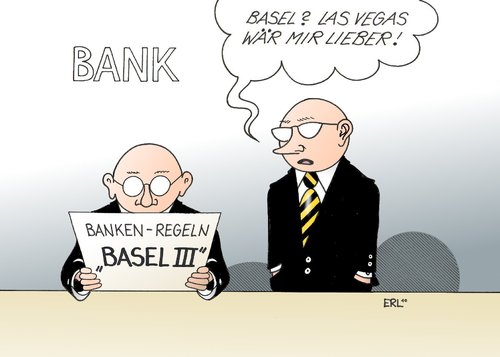
Pulling the Basel III teeth


Capitalism needs bubbles to keep itself afloat

Draft

Today international financial regulators came together in Basel to re-adapt, soften the Basel III rules. The Basel III rules had been agreed by the G20 in the aftermath of the crisis to avoid a new “Great recession” in the future. These Basel rules would be implemented from 2013 until 2018. Their main objective was to limit the amount of risks of bank investments. As a bank asks deposits of people and invests this loaned money in the economy – through credit-lines, investments or loans – it takes the risk that these loans are not paid back and gets a (high) profit in return. In order to ensure that the deposited money is paid back to the people having deposits (bank-accounts), it needs a buffer to compensate possible losses. This buffer is the so-called capital base or the “own capital” of the share-holders. The Basel-agreements state which capital can be seen as “own capital” and how high this buffer should be.  This buffer limits the amount of risks and investments a bank can make.

A very simplified example could be like this: If capital requirements would be of 10% of Tier I capital (in its current definition), this would for example mean that a bank need 1 billion dollars invested by its shareholders, to ask 9 billion of saving-accounts, in order to invest 10 billion dollars. If those 10 billion would create a profit of 10%, the bank would get 1000 million, of which it had to give 180 million to the deposit-holders (at 2% interest). This would mean that the bank would make 820 million dollar profits for an invested capital of 1 billion, or 82% a year. – If however the economy is going bad, and a bubble bursts, these 10 billion make losses 5% for example, only 9,5 billion remains. Deposit-holders (9 billion) and their 2 percent interests (180 million) have nevertheless to be paid back, so only 320 million remain of their initial 1 billion profits. If the losses would be 10% or more, they would have losses of 1,180 million on their 1,000 million invested and the bank would go bust… 

How higher the capital buffer, the less risk the bank has to go bust. Bank default risks the creation of global financial catastrophes, particularly, if all banks have big losses as a consequence of “systemic risk”, a global economic downturn or capitalist recession, destroying the “financial stability” of the system and requiring state-intervention at the cost of the taxpayers, as we have seen in 2008.  In the months following the biggest financial crash ever, the global political and industrial elite, showed the intension of being hard on the financial elite, as their “casino-capitalism” was ruining their real political economy with their risk-taking. The G20, lead by Sarkozy, made agreement on tougher regulation, as the soft regulation was seen as the cause of the crisis. These negotiations between states and financial regulator lead to the agreement of the new Basel III agreements, which had always been harshly opposed by the global financial elite. These argued that stronger regulation would endanger the recovery from the crisis, as it would cut the available money-supply for investing in the economy and provide purchasing power.

As a matter of fact, both were right. No extra regulation would mean a big risk to the stability of the system. Extra regulation would have a negative impact on growth, and provoke a possible depression. This contradiction is an expression of the contradictions within capitalism itself. The contradiction was trespassed temporarily in 2011, through the development of harsher rules of Basel III, on capital requirements for example – though still very liberal in comparison with the regulation during the Keynesian Bretton-Woods age, and before the introduction and development of neoliberal financial liberalization and globalization, as well as the development of the battery of complex structured financial investments as we know them now – but with an agreement to implement them only over time; concretely, the first measures would be only implemented from 2013 and finished in 2018.

Now, in 2013, when the first regulations would begin to be implemented, they are already softened. What could already be predicted in 2011, that the new regulations would be only window-dressing proves to be right. You cannot make regulations more strictly, when the world economy risks being re-thrown in a recession. At the same time, the financial world is already back again on its ancient track. Financial risks have never been greater, as recent OESO pointed out in its analysis of the European bank sector this week… but weak regulations, monetary financing by the ECB, the rescue packages of the FED, the billions of the European troika to save the European banks, etc… have also brought profits back to pre-recession hights. The music is playing again, the bubles and balloons are back for the party… and "as long as the music is playing, you've got to get up and dance," as Prince, the former CEO of citibank said in 2007, months before the crash of Bear Stearns and IAG.

As in 2007, everyone involved can see that if there would be a recovery – ‘recovery’ is a bad worth for a weak contention of a deep recession due to the Euro-crisis and a new banking crash – this recovery is fictitious, as unemployment is still rising, purchasing power is decreasing and government finances of most countries are not really healthy. Since the 1970’s capitalism has delt with its structural over-production crisis trough debt-financing of consumption, through financial liberalization. In order to keep consumption and accumulation growing it created an immense financial sphere, with financial titles that are totally disattached from the real economy and are no more than virtual value-forms. It needed these instruments to keep up its growth and restore its profits during the last 30 years: Capitalism needs the bubbles to keep itself afloat.

This is de reason why the Basel III agreements have been softened, and why a new financial crisis probably will not take long to emerge.


Wednesday, December 19, 2012

To be or not to be – that’s not the question


The Euro-exit and the dilemma of the Portuguese left

(DRAFT: working paper)

One of the practical issues that dominates the debate within the left and in the Portuguese society in general as a consequence of the Euro Crisis, is the question if Portugal should or should not stay in the Eurozone. Since the intervention of Troika in Portugal we have seen different organizations on the left and on the right take different points of view in this issue. A deeper understanding of this issue is crucial to find possible ways out of the current crisis situation.

Supported by an increasing number of academics that the incompatibility of the peripheral economies within the monetary union, the movement that defends the exit of the Eurozone is led by the Portuguese Communist Party (PCP), and includes movements as the MRPP. It’s position is usually influenced by nationalist and protectionist ideas, defending the sovereign rights of the Portuguese nation. Most point out that the Euro is a barrier for the competitiveness of the economy. The exit of the Eurozone would enable the country to regain control of vital monetary and budgetary macro-economic instruments to help the national economy recover from the crisis situation, through competitive devaluation and more inflationary-oriented policies. An example of this standpoint is represented by this interview with Jeronimo de Sousa, General secretary of the PCP.
Jerónimo de Sousa, in turn, said that the euro meant that Portugal lost competitiveness, sovereignty and the instruments that could help the country in a crisis scenario". Early in the debate, the communist leader pointed to "the conception of the European Union” as a point of divergence between the PCP Left Bloc. (Sol, 2011)
The leaders of the left bloc, in the persons of Francisco Louça and Joao Semedo, have taken the position that Portugal should stay in the Eurozone, as the exit would have “catastrophic effects” (Sol,2011). The exit of Portugal would be “catastrophic” as net-importers and net-debtors, such as Portugal and the other PIGS, would see the values of their debts in Euro rise, as well as the prices of the imported products. The exit of the Euro would mean a devaluation of around 50 percent of the new currency, which would mean a devaluation of the purchasing power of salaries and pensions, as well as a rise of the value of the consumer and public debts and interests.
For Louçã (Sol, 2011), the exit would be nothing else than a much quicker and more brutal means to implement austerity. As the aim of austerity is a long term “internal devaluation”, the currency devaluation by the Euro exit would only bring the same effects, but immediate. The only sector that would gain with these kind of policies, would be the export-sector
"For every three euros we export, we import four euros" said the leader of BE, pointing towards an increased indebtedness as the main consequence of a Portuguese exit of the euro. "everything would be much more expensive. Wages and pensions would lose purchasing power, and people who have housing loans would have to begin to pay much more. The worker would be the first victim of a catastrophic exit of Portugal the euro," said Louçã, who defended the issuance of European bonds as a way to "stop the speculation" on the national debt. (Sol, 2011)
"Beware of the beast. The Portuguese public debt is serious and dangerous, and the debt of banks is as big as the public debt. The day the banks would be nationalized, the Portuguese public debt will double" [...] Francisco Louçã said to disagree with any Euro exit strategy, and understands that this is being advocated by the "useful idiots of Mrs [Angela] Merkel." This exit, he said, "only favors the destruction of a common European policy, important for the response to austerity, and puts the left in the inacceptable position of proposing austerity against its people." The party leader admits that there are economists advocating this strategy, which "would favor the export sector", with the devaluation of the currency, expecting that the export industry would later invest in the economy and create jobs.
"
The calculations say it [the escudo] would be devalued by 50 percent," making imported goods "fifty percent more expensive and half the worth of the wages and pensions."
To Francisco Louçã, the nationalization of failed banks would mean the "socialization of the gigantic losses of financial capital", assuming the payment of the double of the public debt doubled, "in taxes, or any other manner". He argues that "the left cannot propose an even more brutal and fast austerity as a solution to current austerity," believing that "in a few years the bosses will invest more and save the economy". "I think it does not make sense from a social point of view. The left has to take a point of view that unifies the people, where the capacity of struggle unites, which is the struggle in defense of the salaries,” he concluded. (Expresso, 2011
The proponents of the exit on the other hand argue that staying within the Eurozone entails submitting the country to the austerity policies of the European Central Bank, and the Troika of ECB, EC and IMF. According to them, the continuation of these austerity policies in order to stay in the Eurozone, are the real social and economic disaster, continuing the downward spiral of unemployment, recession and neoliberal policies.
Each of the parts brings in some fundamental, correct critiques to the debate. The opponents of the exit bring fundamental critiques to the nationalist course and point out the catastrophic effects of leaving the Euro. The proponents bring in fundamental critiques to the Eurozone and the catastrophic effect of staying within. If those critiques of both sides are correct, this means that both alternative solutions are bad. It seems that the Portuguese left is struck within a dilemma which has no way out; any of the alternatives will be fundamentally bad for the Portuguese working class, and the Portuguese left is catched within the own contradictions of the capitalist system.
The apparent dualism between the two bad options, is a typical dialectical contradiction. What appears to be a dilemma with only bad options, is nothing else than a reformulation of other social contradictions which are fundamental to address in order to be able to have non-bad solutions for the fundamental dilemma of the Euro-exit. These fundamental contradictions of capitalism emerge in various forms in crisis periods; there is the recurring tension within capitalist governance between the accumulation process the legitimation of the system (Paterson), There is the tension between wages and profits (Marx), between democracy in society and the freedom market…
The crisis of the Eurozone however reveals one of the most fundamental contradictions in its clearest form; the fundamental political choice between the common good and private property. The common good is embodied by public services, a sustainable economy, good life, good salaries and working conditions, protection for the old and a future for the youth. Private property is embodied as juridical rights to ownership of economic resources, shares, but in particular ownership rights on the value of bonds, other debts and the rights to their repayment and the right to their interests. Within the current crisis situation it becomes clear that there is an impossibility to warrant both. Either policies defend the rights of the bondholders and the “rule of law”; which is the policy of Germany, the European Commission, the Troika and the national governments implementing austerity programs, which means a downward spiral of cuts in public and private spending, flexibilization and recession, with the scarification of the welfare state and democracy. Or they defy those property rights, the financial markets, the Troika and the ECB, practice juridical and financial disobedience and give priority to social rights, defending the historical social conquests, social justice, and fight for their improvement.
If the Euro is let out of the question, what is the question then? Other more fundamental policy choices emerges from the reality; the current social crisis situation demands far-reaching intervention to correct the consequences of the economic crisis and market failure – one would name them the internal contradictions of the capital accumulation process. Rising unemployment, particularly a youth unemployment reaching 30 to 50 percent in the peripheral member countries of the Eurozone, and the loss of private purchasing power provoking internal recession, requires massive public investment programs for job-creation and support of salaries. Unsustainability of debt-levels both in the public and private sector requires a massive debt-canceling and restructuring scheme, which will require a nationalization of the financial sector, in order to save it from its own collapse after cancelling debts, as well as to have the means to control public investments and redirect the economy towards public priorities. The housing-question, with hundreds of thousands of young people being forced to live again in their parents homes, while 750.000 homes have been abandoned, should be addressed with a redistribution and restoration program. The agriculture industry, which was gravely affected by contra-productive European CAP, should be addressed by a new Agrarian reform and sustainable reform… Similar issues raise in the forest management, small businesses, precarious working conditions, the ghetto-formation, … All these issues are the consequences of market-failures and as the capitalist system gets into crisis those problems increase, and are further increased by policy measures and austerity to secure financial property.
If a government would implement these measures within the current institutional framework, it is evident that these policymakers will enter in a confrontation with the authorities and interests governing the Eurozone. Non-payment of the public debt, the creating of massive public investments and nationalizations are policy-measures which would be considered as inacceptable in Brussels. As The ECB probably will not grant enough cash in such circumstances, probably this disobedient government will have to recreate its own monetary instruments. The long term consequence would therefore be a Euro-exit.
This form of Euro-exit however relates to the initial euro-exit as a dialectical negation of a negation, in that this Euro-exit as a consequence is totally different from the Euro-exit as an initial step. While the initial exit would mean worsening of living conditions and devaluation of salaries, the second exit would be a consequence of increased living conditions and relative salaries. While the initial exit would mean an increasing unsustainable debt and interests, the second exit would be the consequence of having no debt anymore. While the first exit would lead to international isolation and autarchy and an example of failure within the hegemonic economic framework, the second exit could be the start of an example new international solidarity movement with Portugal as an example of success of finding new ways of economic alternatives.
It seems clear that the whole continent is struggling with the same problems at the moment. Northern Europe has been able however to transfer part of the crisis situation to the south through competition strategies. If because of this the rest of Europe is not yet ready for change; let them wait… Changes in Southern Europe will quickly require far-reaching political changes in the north; as its banks should have lost , and now its tax-payers will lose billions of unsustainable debt. A Euro-exit of the PIGS will moreover cancel the Germanic competitive advantages which have been cemented on the Euro and a common monetary policy.

Conclusion

In this paper we discussed the different approaches towards a possible Portuguese exit of the Eurozone. While the pro-exit faction argues that the Euro damages its competitiveness and that staying in the Euro means a continuation of the disastrous spiral of deflationary politics, the anti-exit faction argues that a devaluation would mean a catastrophe for purchasing power and living conditions. Both sides have convincing arguments against the other, which turns the euro-exit question into an impossible dilemma. The dialectic method however enables us to transgress this contradiction into a political choice between a common and private property. We conclude that the solution of the dilemma is to not make a choice, but to advance with changes in socio-economic policies that end austerity. A possible Euro-exit would therefore be a consequence of the strategy, not a strategy as such. The difference between both Euro-exits, relate as a negation of the negation. Political change and leaving the central question open to the European establishment seems to bring the non-bad option in a dilemma which seem to have only bad solutions.

References:
Sol, 2011, Saída de Portugal da zona euro divide Jerónimo e Louçã (Pedro Guerreiro); 12-05-2011 http://sol.sapo.pt/inicio/Politica/Interior.aspx?content_id=19087
Expresso, 2011, Louçã discorda de qualquer estratégia de saída do euro; 17/11/2011 http://expresso.sapo.pt/louca-discorda-de-qualquer-estrategia-de-saida-do-euro=f688604#ixzz2FX8RnuRA


[1] The author is Economist and Political Scientist, and PhD candidate at CES, the Center for Social Sciences, University of Coimbra – Portugal, and at the department of Political Sciences, University of Ghent - Belgium

Friday, November 16, 2012

Verslag: succesvolle Algemene Staking eindigt in rellen in Lissabon

Portugal was het eerste land dat de Algemene staking uitriep voor 14 oktober. Ze was gericht tegen de besparingen in de begroting voor 2013. De staking vond weerklank in andere landen, en algemene stakingen en lokale stakingen volgden in Griekenland, Spanje, Italië, Polen, Tsechie, Roemenie, Malta, Cyprus, Frankrijk en België, daarnaast vonden ook nog eens protestacties plaats in heel wat andere landen. In portugal was de algemene staking de grootste ooit, maar eindigde de betoging in Lissabon in rellen… een verslag.
Algemene staking werd opgeroepen door de CGTP. UGT-Voorzitter Joao Proença weigerde de staking te ondersteunen omdat hij de CGTP van sektarisme beschuldigde. Verschillende centrales van de UGT voegden zich echter bij de oproep van de CGTP, wat tot de belachelijke situatie leidde dat Proença zelf mee-staakte omdat de vakbond waarvan hij lid was de oproep ondersteunde, maar hij zelf opriep om niet te staken.
De algemene staking, werd erg goed opgevolgd. 85 procent van de locale administraties staakten. De stakingsgraad in het onderwijs bedroeg 80 procent en in de gezondheissector 90 procent. In Lissabon lag de metro stil, lag het spoor blat en bleven de ferry’s over de Taag allemaal aan wal.  Op de piketten van de vuilnis-ophaling in Lissabon daagden slechts 2 chauffeurs van de 121 op, en aan het bus-depot van Cabo Ruivo werden behalve 6 bussen voor minimum dienst alle andere, weinige, werkwilligen door 2 piketten overtuigd om de staking te steunen of tegengehouden. De werknemers van DHL beslisten op eigen basis,én voor het eerst, aan de start van hun dienst, zich aan te sluiten bij de staking.  bij  en zich allen aan te sluiten bij de vakbond van de Post.
De betogingen die volgden na het ontbinden van de piketten waren erg succesvol. De CGTP had in tegenstelling tot vorige jaren opgeroepen tot betogingen. Ondanks de moeilijkheden voor manifestanten om ter plaatse te geraken door de algemene staking, waren de betogingen groter dan bij vorige algemene stakingen, met 15.000 betogers in Lissabon. In de hoofdstad voegden 3 betogingen zich bij elkaar; een betoging van “studenten tegen besparingen” en “Que se lixe a Troika”, een heel strijdbare van de dokwerkers en de “beweging van werklozen” (MSE), en de hoofbetoging van de CGTP; om daarna richting het Parlement te trekken. De 15.000 man verzamelde zich aan het parlement voor de toespraak van Armenio Carlos, secretaris generaal van de CGTP, die een besparingsstop en de val van de regering eiste, en het geslaagde karakter van de staking benadrukte. Hij bedankte en feliciteerde de onafhankelijke sociale bewegingen met hun mobilisaties voor de algemene staking en hun aanwezigheid aan de pikketten, en benadrukte ook de noodzaak aan verder samenwerking in de toekomst; een duidelijke stap weg van de traditionele sectaire verdeeldheid!
Niettemin werd de avond ontsiert door zware rellen. Het vaccuum dat ontstond toen de officiele vakbondsstructuren Sao Bento verlieten werd ingenomen door een kleine minderheid van zo’n 50 relschoppers die gedurende lange tijd de confrontatie met de politie zochten, ze met losgerukte kasseien, glazen flessen en pettards bekogelend. Deze groep was echter een duidelijke minderheid en duidelijk indentificeerdbaar. Na twee uur chargeerde de politie vanop de trappen van het parlement op de menigte, en gewapend met wapenstokken en honden, sloegen ze iedereen neer die ze te pakken konden krijgen. Pacifistische betogers, vakbondsleden die in meerderheid ter plaatse gebleven waren zonder hun leiding…  maar vooral ook vrouwen, kinderen, invallieden, en bejaarden… Iedereen werd door de opgefokte agenten tot bloedenstoe geslagen terwijl de menigte in paniek wegvluchtte, maar door de smalle straten rond het plein opgehouden werd. Groepjes betogers trachten enkele honderden meters verder verloren kameraden, familieleden en vrienden terug te vinden; maar bleven achtervolgd en uiteengedreven worden in de richting van de rivier, zich verschuilend in huizen, supermarkten en cafés voor de zee van politie, terwijl de kleine groep gewelddadige manifestanten zich eveneens door de straten verspreiden vuilniscontainer in brand stak. Hierna werd de hele buurt afgezet door oproerpolitie.
Resultaat was dat volgens de politie er 47 gevonden vielen. Die cijfers zijn echter veel te laag, aangezien de meest mensen immers geen aangifte deden van verwondingen, onder wie de auteur van deze tekst. Daarenboven werden ook nog eens meer dan 100 mensen opgepakt. De meesten werden na middernacht vrij gelaten, na het verplichte ondertekenen van blanco formuleren. De gearresteerden werden vaak psychologisch en bijna fysiek gefolterd; zo werden heel wat arrestanten verplicht zich in hun cel te ontkleden, werden ze verplicht te pompen (push-ups), en werden sommigen verhoord in verlaten, onofficiele, politiegebouwen. Uiteindelijk bleven nog 7 mensen minstens een dag aangehouden.
In de media verdween alle aandacht voor de staking zelf en werd bijna enkel aandacht gegeven aan de rellen. Hiermee probeert men de staking en vooral ook de sociale bewegingen te criminaliseren, en gebruikt men het geweld van een minderheid om de aandacht af te leiden van de meest geslaagde algemene staking uit de Portugese geschiedenis sinds de revolutie.
Het is duidelijk dat de schuld voor het geweld in eerste plaats bij de regering en de Troika ligt; zonder de aanhoudende besparingen en hun sociale oorlogsvoering tegen de bevolking zou er geen basis zijn voor dit avonturistisch geweld dat geen enkel positief resultaat oplevert. Toch heeft ook de linkerzijde boter op het hoofd. Aan de ene kant was het een fout van de leiding van de CGTP om de betoging voor het parlement te verlaten, en hun leden en onafhankelijke zonder structuren achter te laten die hen eventueel konden bijstaan tegen criminalisering en politiegeweld, alsook een rem zouden vormen voor de geradicaliseerde stenen gooiende jongeren.
Maar ook de volledige politieke en syndicale linkerzijde heeft boter op het hoofd. Het is hun gebrek aan het formuleren van geloofwaardige politieke alternatieven en geloofwaardige actieplannen voor de strijd verder te zetten, die mensen tot wanhoop drijft. Het individuele perspectiefloze geweld kan immers enkel ingang vinden omdat mensen niet meer in de voorgestelde methodes geloven. In die zin is de redeneerwijze van die relschoppers dezelfde als van de stakingsbrekers: “Deze algemene staking op zich haalt toch niets uit”, en dus leggen ze zich toe op anti-sociaal gedrag. Het is de taak van de linkerzijde om geloofwaardige alternatieven en perspectieven aan te bieden voor de crisis en de politieke situatie, opdat de aanwezige woede onder grote delen van de bevolking gekanaliseerd kan worden naar een beweging die de Troika kan stoppen en een echt alternatief vormt. Daar faalt de Portugese linkerzijde: voor de parlementaire linkerzijde is socialisme enkel een abstract woord uit de programma’s maar wordt ze niet gekoppeld aan de praktische eisen die vandaag nodig zijn. Hetzelfde geldt overigens voor de nieuwe radicaal-linkse partij MAS, die zich vaak radicaal en populistisch opstelt, maar socialisme nauwelijks vermeldt in hun politiek materiaal; laat staan dat ze een goed overgangsprogramma opstellen. De CGTP kwam dan weer niet verder dan aan het einde van de algemene staking slechts een “concentratie” op 29 november aan te kondigen als volgende stap in de strijd.
Er is daarentegen nood aan politisering van het verzet en er is de objectieve nood van socialisme als antwoord op de toenemende barbarij van de sociale aanvallen van de Troika en de regering enerzijds en het blinde perspectiefloze geweld van een minderheid daartegen anderzijds. De sindicale linkerzijde dient een strijdplan uit te werken op middellange termijn met verschillende algemene stakingen, 48 stakingen, roterende stakingen en dergelijke tot de terugtrekking van de besparingsmaatregelen en de val van de regering. Op politiek vlak is er nood aan eenheid van de linkerzijde voor de voorbereiding van een arbeidersregering, steunend op een basis van een socialistisch programma die de stopzetting van de betaling van de schuld eist, de nationalisering van de financiele sector en de belangrijkste sectoren van de economie en de bevolking democratisch organiseert.

Monday, November 5, 2012

Brief aan de Duitsers


"Wellicht weet u het niet, maar de leningen aan Griekenland, Ierland en Portugal zijn in werkelijkheid een schuld opgelegd aan de volkeren van deze landen om uw banken 'te redden'."

Brief door Jose Castro Caldas. Castro Caldas is mijn co-promotor voor mijn doctoraat aan CES (samen met Carl Devos aan de ugent), hij is economist, onderzoeker aan het Centrum voor Sociale Studies in Coimbra, en actief binnen het Links Blok en het Burgerinitiatief rond het onderzoek maar de schuld.
Overgenomen van esquerda.net

Mevrouw Merkel, bondskanselier van Duitsland
Ter gelegenheid van uw bezoek aan ons land, had ik u graag een kort bericht meegegeven voor uw landgenoten. Graag zou ik hen dit willen zeggen:
- We weten dat uw regeringen u in de afgelopen tien jaar zeiden dat uw loon diende verlaagd te worden ​​om de toekomst van uw sociale staat te behouden. Ze vertelden je, en je geloofde ook, dat als een ​​klein deel van de inkomsten afgestaan zouden worden, jullie concurrentieler zouden worden. Op deze manier zou het land een deel zou kunnen zetten om uw pensioen te betalen en de toekomst van de sociale rechten van uw kinderen kunnen ondersteunen.
- We weten dat de afgelopen tien jaar niet makkelijk was voor u en dat uw land. Sinds toen is de samenleving harder geworden en de ongelijkheid toegenomen. We weten ook dat het beoogde doel werd bereikt. Duitsland werd inderdaad "concurrerentieler”, het exporteerde meer, en importeerde minder en goedkoper, het bouwde grote overschotten uit op de betalingsbalans en zorgde voor een grote toename van het financiele vermogen op uw banken.
- We weten, maar u misschien niet omdat uw elite u het wellicht niet vertelde, dat dat financiele vermogen, bij gebrek aan beter alternatief, werd doorgesluisd naar leningen aan lage rente aan banken in Zuid-Europa , met inbegrip van Portugese banken, die het op hun beurt, met veel reclame en kleine lettertjes uitleenden aan families in het zuiden, waarvan de salarissen lag bleven, maar net zoals jullie een huis, een auto en een levensstijl zoals de uwe wilden hebben.
- Onze economieën groeiden weinig; onderhevig aan concurrentie door de globalisering die vooral uw exporterende bedrijven ten goede kwam. Maar via het krediet dat uw banken, via de onze. ons ​​boden, zou ervoor zorgen dat heel wat van onze families toegang kregen tot consumptiegoederen, velen geproduceerd door uw exporterende bedrijven. Een tijdje leek deze situatie goed voor iedereen.

- Wanneer in 2008 alle zeepbellen echter begonnen te barsten, en uw banken ontdekten dat ze te veel risico hadden genomen werd het krediet aan de Zuiderse banken en zelfs staten afgesneden. Als de Europese Unie niet had besloten dat geen enkele bank failliet mocht gaan, waarbij de staten verantwoordelijk werden voor de bankschulden, zouden we getuige geweest van een razzia op zowel schuleisende als schuldlijdende banken. Maar de EU-regeringen besloten de banken te “redden", vervolgens zouden ze samen met de ECB en het IMF, de “staten redden.” Op die manier werden jullie eigen banken, die geld hadden uitgeleend tegen een lage rente, alle risico-criteria negerend, zelf gered van faillissement. Op die wijze zijn ze erin geslaagd om de rente op dit sort leningen te blijven innen tot ze afgeschreven waren. Anders waren zij nu ook allemaal failliet. U weet het allicht niet, maar leningen aan Griekenland, Ierland en Portugal zijn in werkelijkheid een schuld opgelegd aan de volkeren van deze landen door de 'redding' van uw banken.
- maar tot nog toe hebben jullie staten, noch jullie allen als belastingplichtigen, niet een euro die wordt uitgegeven voor deze 'bailouts' van Griekenland, Ierland en Portugal. Tot nu toe heft uw regering enkel garanties verstrekt aan een Europees noodfonds dat gratis leent en dat geld uitleent aan de “geredde” “probleemlanden” aan tot 3% of 4%.
- Het kan zijn dat u het niet weet, maar die situatie zal binnenkort wellicht veranderen.  De opgelegde besparingen in ruil voor de leningen, verdrinken de “geredde” landen. Kortom, er komt een punt wanneer deze landen op die manier die schulden niet meer kunnen zullen kunnen terugbetalen. Op dat moment zullen er verliezen zijn, zware verliezen voor iedereen; Duitse belastingbetalers inbegrepen.
maar al de moeite die jullie  de afgelopen tien jaar hebben gedaan om te maken Duitsland 'concurrerentieel' te maken kan uiteindelijk in een oogwenk in rook opgegaan zijn. Uw overschotten, zijn onze tekorten, het  financieel vermogen van jullie banken zijn onze schulden.Jullie leiders hoorden te weten dat een economie een system is, en de Eurozone is daarin geen uitzondering. Wanneer partijen trachten voordeel te halen ten koste van elkaar, kan het resultaat van de geheel en elk appart slechts desastreus zijn.
- Het kan zijn dat u het niet weet, maar uw leiders misleiden u al sinds te lang.
Vergeef me, mevrouw Merkel, als ik tussen sommige woorden een overmaat van teveel bitterheid liet doorschijnen. Ik kan het gewoon niet kan verbergen: het opzetten van de ene volkeren tegen de anderen is ondraaglijk voor mij, vooral wanneer ze uiteindelijk worstelen met een probleem dat gemeenschappelijk is voor iedereen – het probleem van de financiele wereld die regeert over onze regeringen, in het belang van de 1% van de bevolking, zowel bij u als bij ons. Herinneringen komen me te boven van tragedies  uit het verleden die vandaag ondenkbaar zouden moeten geweest zijn. Ik hoop toch dat u het allicht met één punt met mij eens bent: die ondenkbare terugkeer naar dat verleden moet ten allen prijze vermeden worden.